In the ever-evolving digital landscape of 2026, online fandoms continue to produce cultural artifacts that blur the lines between gaming, social commentary, and absurdist humor. One such phenomenon that has left an indelible mark is the 'McGenshin' meme—a creative explosion where the esteemed warriors and vision-wielders of Genshin Impact were reimagined as beleaguered employees of the global fast-food chain, McDonald's. This meme, which originated years prior, serves as a fascinating case study in communal storytelling and parody, demonstrating how a player base can collectively build a parallel, hilariously mundane universe for its beloved characters.
The genesis of this internet folklore was as organic as it was unexpected. It began not on a grand stage, but in the off-topic channels of the official Genshin Impact Discord server. A spark of imagination ignited when a few fans whimsically edited official character artwork, donning the iconic McDonald's visor and uniform on figures like the dignified Zhongli or the ever-diligent Ganyu. This simple act was like a single pebble starting an avalanche of participatory creativity. The concept of Teyvat's elite working a fast-food gig resonated instantly. Players began adopting these 'McProfile Pictures' and engaging in impromptu role-play, crafting narratives where Archons worried about fryer oil temps and Adepti memorized the ingredients of a Big Mac.
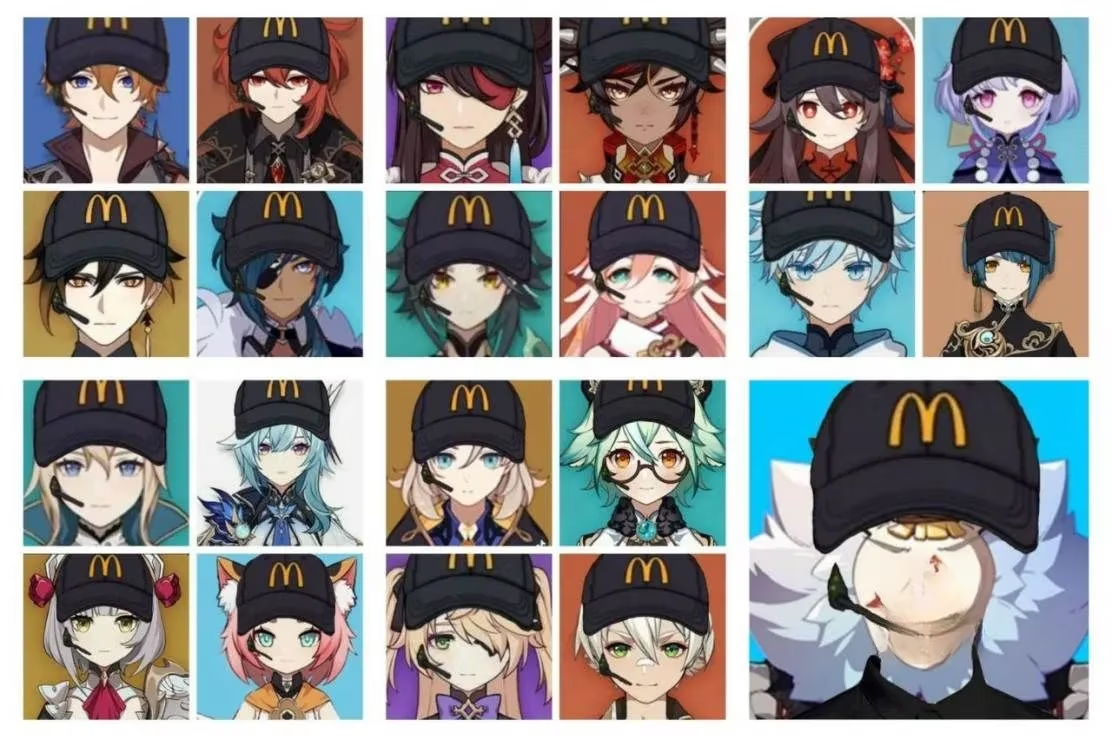
The meme thrived on a perfect storm of character traits and relatable modern anxieties. Characters known for their relentless work ethic, such as Ganyu—who is canonically overworked—became the perfect avatars for the meme. Fans delighted in imagining how each hero would handle the quintessential McDonald's experience:
-
Zhongli, the god of contracts and history, might meticulously explain the geologic origins of the potato in a customer's fries, all while forgetting his own employee ID number.
-
Diluc, the wealthy vineyard owner, would likely be the disgruntled night-shift manager, viewing the drive-thru rush with the same disdain he holds for the Fatui.
-
Klee, the explosive-loving Spark Knight, would undoubtedly be banned from the fry station after one too many 'experiments.'
This role-playing spread through the community like a particularly contagious strain of Dendro, transforming the official forums into a temporary virtual restaurant. However, much like an overzealous health inspector, the moderation team on the official Discord eventually intervened. The sheer volume of McGenshin role-play began to overwhelm regular discussion channels, leading to a crackdown where participating players risked being muted. This official sanction, however, did not extinguish the meme; it merely caused it to migrate and evolve.
The community's response was a testament to its resilience. Dedicated Discord servers sprang up, becoming entire themed ecosystems for McGenshin lore. Twitter threads became serialized comedies of these characters' minimum-wage misfortunes. The meme's life cycle became a fascinating dance between fan creativity and platform moderation, a dynamic as old as online communities themselves. It showcased how a fandom can operate like a decentralized hive mind, where an idea, once released, takes on a life of its own, mutating and adapting to survive in new digital environments.
Perhaps the most enduring legacy of the McGenshin trend was its spillover into fan art. Talented artists began producing high-quality crossover pieces, blending Genshin Impact's distinct aesthetic with McDonald's stark corporate branding. These artworks were not just jokes; they were polished, thoughtful compositions that celebrated the absurd premise. The meme had matured from a chat-room gag into a legitimate, shared artistic endeavor. It raised an amusing hypothetical: given the game's successful real-world collaboration with KFC in China, could a McDonald's team-up in other regions be so far-fetched? In the world of gaming crossovers, stranger partnerships have certainly occurred.
Reflecting on this from 2026, the McGenshin meme stands as more than a forgotten internet joke. It was a cultural moment that highlighted several key aspects of modern fandom:
-
The Power of Collective Absurdity: It proved that the most engaging communal activities are often those that are entirely player-generated and gloriously silly.
-
Character Relatability: By placing god-like beings in painfully ordinary jobs, the meme made them more human and relatable, exploring their personalities through a new, humorous lens.
-
The Ecosystem of Memes: It demonstrated the full lifecycle of an online trend—birth on a mainstream platform, conflict with moderation, migration to dedicated spaces, and evolution into sustained artistic expression.
While waiting for new game updates, players have often turned to such community-driven content to pass the time. The McGenshin saga was a masterclass in this art of communal time-killing. It was a shared daydream, as intricate and temporary as a latte art masterpiece on a fast-food counter, and as persistently resonant as the echo of a french fry falling into a nearly-empty hot hold bin at 3 AM. It reminded everyone that sometimes, the most compelling stories in a game's universe are the ones the players write for themselves, especially when they involve asking, 'Would you like an Apple Pie with your Primogems?'